1. Tricycle Classification and Assembly Requirement Differences
As core vehicles for short-distance logistics, urban-rural passenger transport and special operations globally, tricycles are divided into three categories according to power type and application scenario. The structural characteristics of different categories directly determine the process configuration logic of the Tricycle Assembly Line:
- Cargo Electric Tricycles: With a load capacity of 300-1000kg, they are the main models for short-distance logistics in Southeast Asia, South America and African markets. The core assembly difficulties lie in the welding accuracy of heavy-duty frames, the connection strength between rear axles and frames, and the consistency of cargo box positioning, requiring the assembly line to have heavy-load carrying capacity for the transfer and positioning of large-size frames.
- Passenger Electric Tricycles: Including semi-closed/fully closed cabs, capable of carrying 2-4 passengers, mainly serving urban-rural public transport scenarios. The core assembly difficulties include body sealing, control of interior assembly gap, and debugging of glass lifters, requiring the assembly line to have high-precision positioning capability to meet the quality requirements of appearance part assembly.
- Special-purpose Tricycles: Including sanitation trucks, refrigerated delivery vehicles, scenic sightseeing vehicles, etc., with high customization rates. The core assembly difficulties lie in the integration of non-standard components and the installation accuracy of special equipment, requiring the assembly line to have flexible model changeover capability to support mixed-line production of small batches of multiple varieties.
2. Core Conveying System of Tricycle Assembly Line
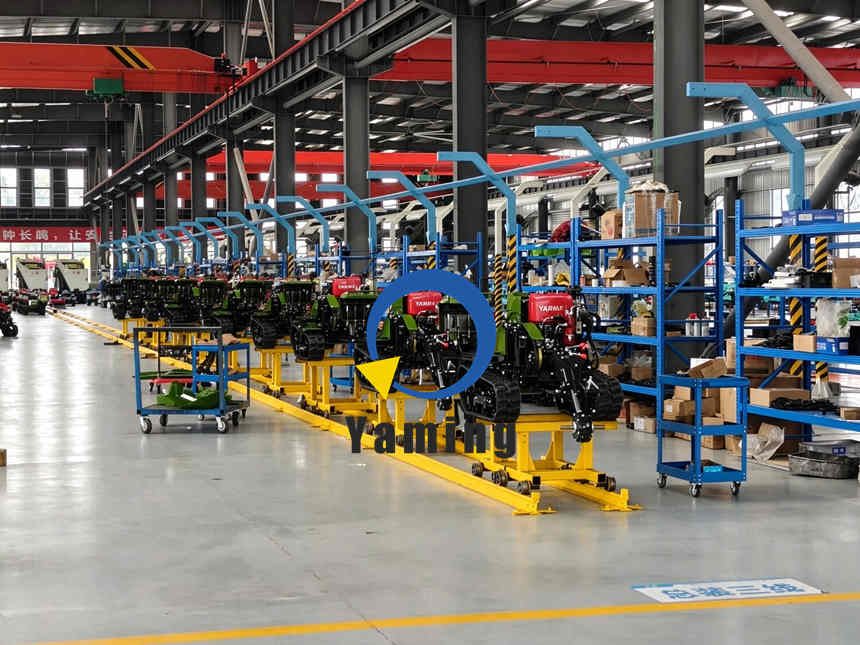
This series of Tricycle Assembly Lines adopts plate chain conveyors and double-speed chain conveyors as core ground conveying carriers, which can be flexibly configured according to the load and precision requirements of different models:
- Plate Chain Conveyor: As the preferred solution for heavy-duty cargo tricycle assembly, it adopts a steel chain plate + high-strength traction chain structure, with a single chain plate load capacity of ≥500kg and an overall line load capacity of over 2000kg. It can withstand frequent lifting impacts of 300-1000kg heavy-duty frames, with an operating vibration amplitude of ≤0.05mm, avoiding assembly deviation caused by the shaking of heavy components during the assembly of core components such as rear axles and cargo boxes. The line body adopts an accumulation design: the tooling pallet carries heavy components such as frames and cargo boxes, transferring linearly along the guide rail. When the pallet reaches the corresponding workstation, the photoelectric sensor triggers a stopper to stop the pallet automatically, allowing workers to complete precision assembly in a static environment with a positioning accuracy of ±1mm.
- Double-speed Chain Conveyor: Suitable for passenger and light cargo tricycle assembly, it uses a 3x speed roller chain for transmission. The tooling pallet runs smoothly with a positioning accuracy of ±0.5mm and an operating vibration amplitude of ≤0.03mm, meeting the assembly requirements of precision components such as bodies and interiors. The accumulation characteristic of the double-speed chain enables independent start-stop of workstations, adapting to the takt adjustment needs of mixed-line production of multiple varieties.
Both conveying solutions can work in coordination with overhead suspension conveyors to realize point-to-point delivery of loose parts such as wheels, motors and batteries, reducing manual handling time and improving material flow efficiency.
3. Core Process Flow of Tricycle Assembly Line
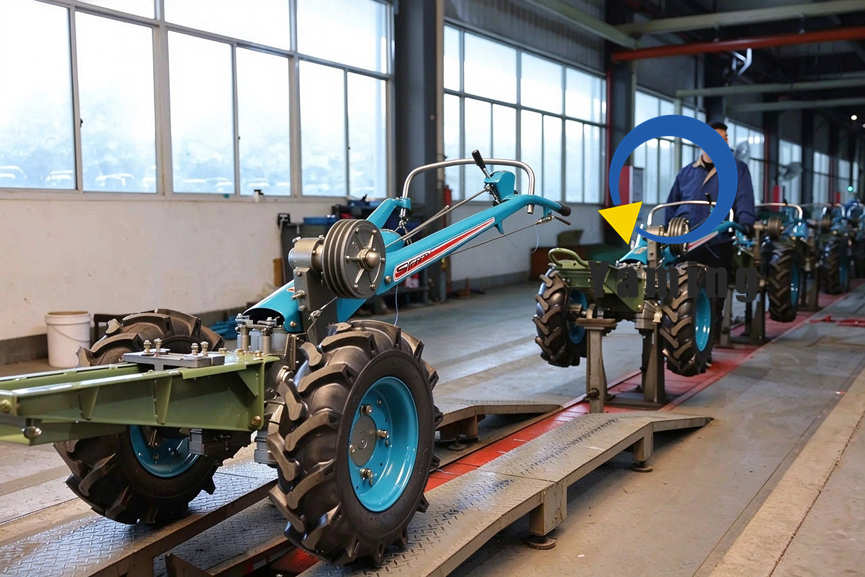
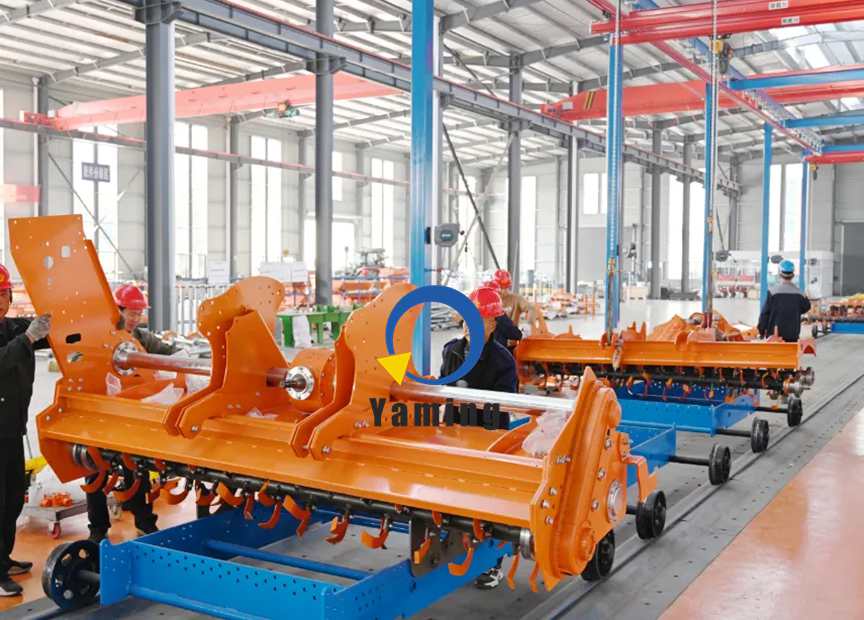
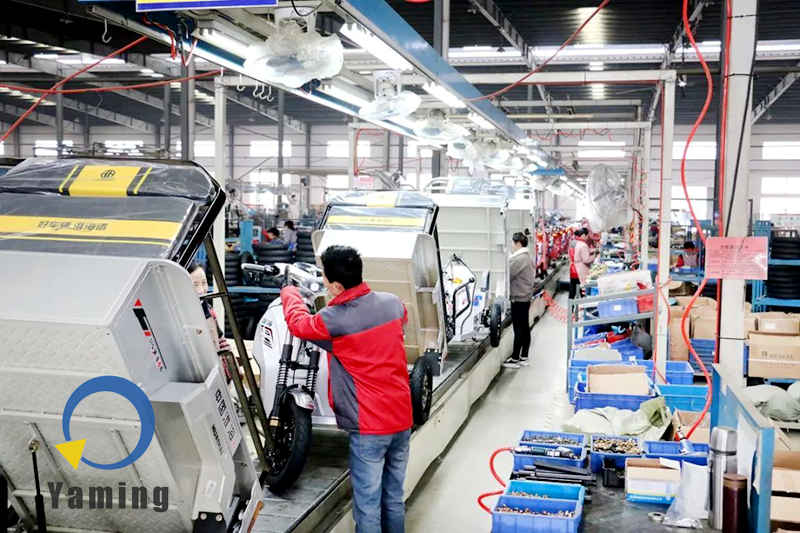
The Tricycle Assembly Line connects each assembly workstation through the conveying system, realizing full-process automated assembly from frame loading to finished vehicle off-line:
- Frame Assembly: The frame is fixed on the conveying line tooling pallet via a dedicated positioning fixture, followed by frame number marking, anti-rust treatment and strength testing of key parts.
- Wheel Installation: Front and rear wheels are installed via automated equipment, with automatic detection of tire inflation pressure. The tightening torque error is ≤±2%, and all data is uploaded for 100% traceability.
- Motor and Electrical System Assembly: Core components such as motors, controllers and battery packs are installed, followed by high-voltage wiring harness connection, insulation testing and controller parameter calibration to ensure stable operation of the three-electric system.
- Body and Interior Assembly: Components such as cabs, cargo boxes, seats and instrument panels are installed. Dedicated positioning fixtures are used to control the assembly gap within ≤0.5mm, meeting appearance quality requirements.
- Suspension System Assembly: Suspension components including front forks, rear axles and shock absorbers are installed, followed by calibration of four-wheel alignment parameters to ensure vehicle driving stability.
- Quality and Performance Testing: 12 performance tests including lights, braking, steering and rain sealing are completed sequentially, with unqualified items alarmed and rejected in real time.
- Final Inspection and Packaging: After passing the re-inspection of overall appearance and functions, the vehicle is protected with packaging and transferred to the finished product warehouse for shipment.
4. Core Advantages of Automated Tricycle Assembly Line
- Application of Intelligent Robots: Industrial robots are used in welding, handling and partial assembly processes, with a repeat positioning accuracy of ±0.1mm. The efficiency is increased by 200% compared with manual assembly, reducing human operation errors and improving product consistency by over 60%.
- Flexible AGV Logistics: Laser/magnetic strip navigation AGVs realize automatic delivery of materials and semi-finished products without fixed guide rails. The delivery path can be flexibly adjusted according to production demands, adapting to the flexibility requirements of mixed-line production of multiple varieties, and reducing manual handling costs by over 40%.
- Automated Testing System: Integrated with automated testing equipment such as online insulation testing, braking performance testing and rain sealing testing, 100% online full inspection is realized. The first-pass product yield is increased to over 99%, with the defect rate controlled within 0.5%.
- Real-time MES Monitoring: The Manufacturing Execution System (MES) monitors the production status of the assembly line in real time. 100% of the whole-process data (tightening torque, test parameters, equipment status, etc.) is traceable, and production anomalies are alarmed in real time. Managers can check capacity, yield and equipment operation status at any time via visual dashboards, improving decision-making efficiency by over 30%.
5. Reference Technical Parameters
|
Parameter Item |
Plate Chain Conveyor Configuration |
Double-speed Chain Conveyor Configuration |
|---|---|---|
|
Core Conveying Form |
Plate chain conveyor |
Double-speed chain conveyor |
|
Single Chain Plate/Tooling Pallet Load |
≥500kg |
≥200kg |
|
Applicable Vehicle Load |
300-1000kg (Cargo type) |
≤300kg (Passenger/Light cargo type) |
|
Workstation Positioning Accuracy |
±1mm |
±0.5mm |
|
Operating Vibration Amplitude |
≤0.05mm |
≤0.03mm |
|
Single-shift Capacity |
150-300 units |
200-400 units |
|
First-pass Product Yield |
≥99% |
≥99% |
|
Operation Mode |
24-hour continuous operation, adjustable takt time |
24-hour continuous operation, adjustable takt time |
6. Contact Information
For inquiries about customized solutions, technical parameters or quotations for Tricycle Assembly Lines, please contact us via email: [email protected]