1. Product Overview
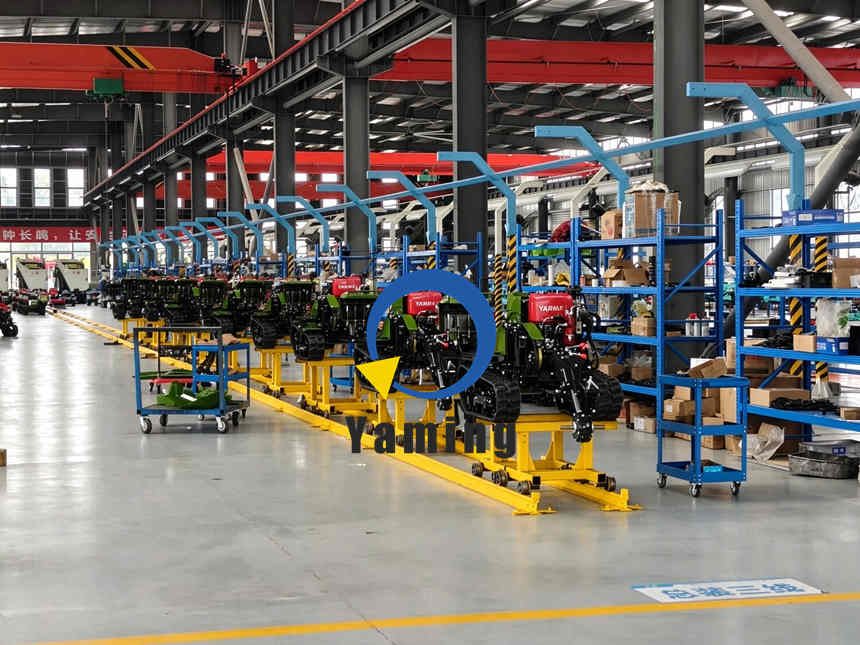
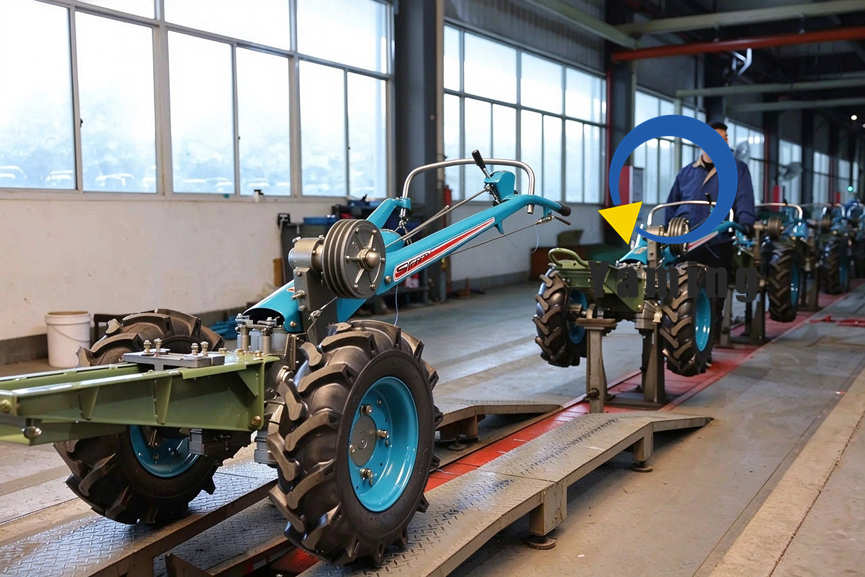
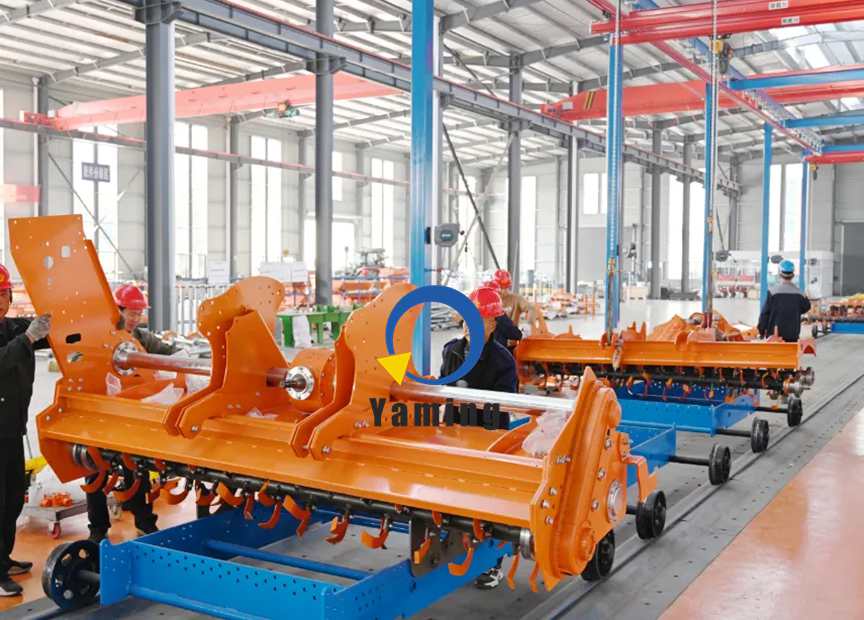
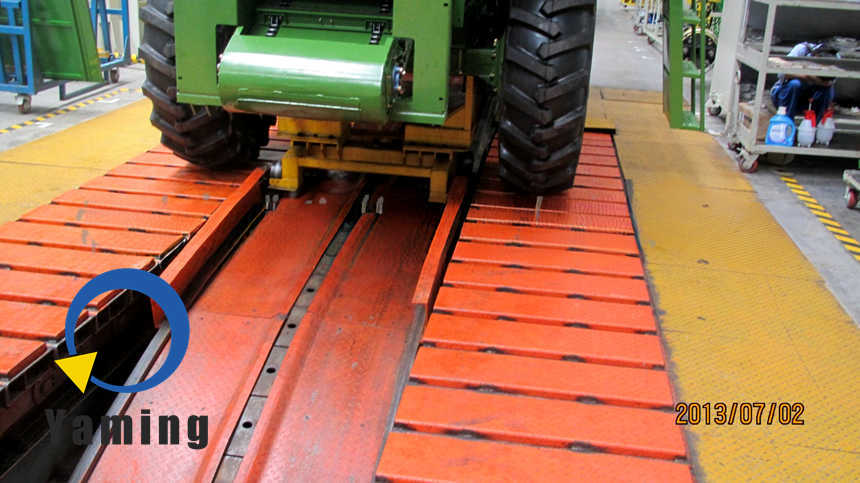
This heavy‑duty general conveyor is developed to address challenges in the general‑assembly process of large‑size complete machines in the agricultural machinery industry (e.g., combine harvesters), including difficult material handling, low efficiency and high risk of body damage. Specially designed for general assembly, transfer and commissioning of heavy‑duty agricultural machinery, the equipment provides enterprises with a stable, reliable, high‑efficiency and energy‑solving solution for complete‑vehicle assembly and logistics conveying.
2. Structural Design and Rigid Support
As a heavy‑duty conveying device, its frame must deliver extremely high rigidity. The main frame of this production line is welded with high‑strength national‑standard steel. Strict overall annealing treatment is performed after welding to eliminate internal stress, so as to avoid deformation under long‑term heavy‑tonnage load and impact.
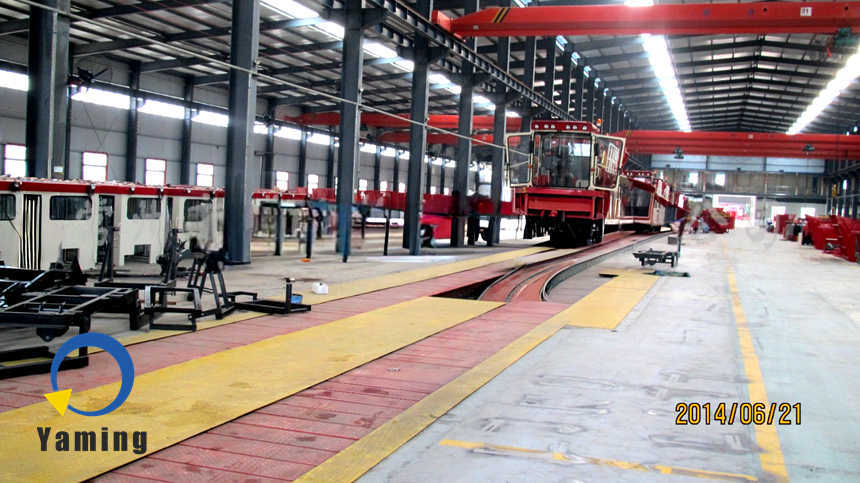
To adapt to complex workshop layout requirements, the conveyor line adopts a combined layout of straight main line + curved turnaround section. This structure supports continuous conveying of long‑bodied products and enables smooth turning in space‑limited areas, ensuring stable posture of complete machines during assembly. Scientifically calculated and shortened support leg spacing further improves the overall rigidity of the line under heavy‑load conditions.
3. Core Conveying Components and Load‑bearing Capacity
Considering the large overall dimension and unstable center‑of‑gravity of agricultural machinery, heavy‑duty chain plates or heavy‑duty rollers are adopted as core traction elements for this production line. Such structure features outstanding impact resistance and load‑bearing capacity, and can steadily drag several‑tonnage combine harvester chassis or semi‑finished frames.
The surface of conveying tracks undergoes high‑precision leveling and wear‑resistant treatment, effectively reducing running resistance for heavy‑equipment sliding. Meanwhile, buffer supports or shock‑absorbing devices are configured at blanking points and heavy‑load start‑stop zones to disperse instantaneous impact force, protect anchor bolts and line foundations and extend equipment service life.
4. Supporting Technical Parameters (Typical Configuration)
Parameters below represent typical value ranges for conventional combine‑harvester general‑assembly lines. Final values shall be customized and calculated according to maximum workpiece weight, overall dimension, production tact time and workshop foundation conditions.
| Parameter Item |
Typical Configuration Range |
Remarks |
| Total line length |
60~200 m (segmentable) |
Customized by number of assembly stations |
| Conveying speed |
0.05~1.0 m/s, variable‑frequency stepless speed regulation |
Matches assembly tact time; smooth start‑stop |
| Rated load per station |
3~15 t |
Calculated as maximum gross weight ×1.5 safety factor |
| Effective line width |
800~1600 mm |
Prioritize preferred series specified in GB/T 10595 |
| Positioning accuracy |
±5 mm (stopping position) / repeat positioning ±2 mm |
Meets requirement for precise assembly alignment |
| Drive power |
2.2~315 kW (selected by length and load) |
Supports head‑end drive or multi‑point drive |
| Operating ambient temperature |
‑25 ℃ ~ +40 ℃ |
Negotiated by both parties if beyond range |
| Overall unit noise |
≤75 dB(A) |
Complies with supporting requirements such as JB/T 5117 |
| Operation mode |
Continuous / stepping (per station tact time) |
Supports PLC interlocked control |
| Installation straightness |
≤5 mm / 25 m |
Complies with Clause 5.5.3 of GB/T 10595 |
💡 For bandwidth, belt speed, pulley diameter, idler roller specifications and other items, preferred value series specified in GB/T 10595‑2017 shall be prioritized. Nominal diameters of idler rollers shall preferably adopt 108 mm and 133 mm; φ133 shall be prioritized for heavy‑load applications.
5. National and Industrial Standards Implemented and Referenced
During design and manufacturing, this production line strictly implements or references standards listed below:
Conveyor Line Equipment Body
‑ GB/T 10595‑2017 Belt conveyors — Core implementing standard, covering basic parameters, technical requirements, assembly and installation accuracy (e.g., frame center‑line straightness, pulley‑axis parallelism, etc.)
‑ GB/T 13306 Nameplates — Fabrication and fixing of equipment nameplates
‑ GB/T 9286‑2021 — Test for paint‑film adhesion (adhesion ≥5 MPa when total paint‑film thickness ≥250 μm)
Product Standards for General‑assembled Combine Harvesters (Compliance Basis for Off‑line Finished Products)
‑ GB/T 46267‑2025 Large full‑feed combine harvesters (implemented on March 1, 2026) — Applicable to large‑size machines with calibrated feed rate ≥12 kg/s and supporting power >160 kW
‑ JB/T 5117‑2017 Full‑feed combine harvesters — Technical conditions — General standard for rice‑wheat harvesters with calibrated feed rate >1.5 kg/s
‑ GB 10395.1 / GB/T 10396 — Guards for exposed moving parts and safety signs (applicable to fully‑assembled complete machines)
Safety and Electrical Requirements
Design of safety devices including full‑line electrical interlocks, emergency‑stop pull‑ropes and anti‑deviation upright rollers follows GB/T 10595 and mechanical‑electrical safety standards.
Vibration of drive units shall satisfy at least requirements for evaluation zone B specified in GB/T 6075.3‑2011.
6. Intelligence and Safety Protection
For power and control, the production line is equipped with high‑performance drive units with variable‑frequency speed‑regulation function. Operators can adjust conveying speed flexibly according to actual production tact time to achieve perfect synchronization with manual assembly or manipulator operations. Soft‑start devices are built into the drive system to avoid heavy‑start‑up‑induced huge current impact on power grid and mechanical components.
Safety is the bottom‑line of industrial production. Complete electrical interlocks and safety protection devices are arranged at key positions of the production line. Emergency‑stop pull‑rope switches and anti‑deviation upright rollers are deployed along the whole line. Upon abnormal contact, the system cuts off power supply and applies braking within milliseconds to prevent edge‑tearing or collision accidents. Besides, striking yellow safety warning lines and anti‑collision guardrails are installed on both sides of the line to continuously remind personnel of operation safety.
7. Ergonomics and On‑site Auxiliaries
Assembly of heavy‑duty agricultural machinery involves numerous high‑weight working procedures such as engine hoisting and cab splicing. Therefore, coordination with workshop auxiliary equipment is fully considered in the initial design phase of this general‑assembly line. Hanging points for KBK flexible lifting rails or heavy‑duty electric hoists are scientifically arranged along the conveyor line, enabling precise electric alignment for heavy core components such as engines and gearboxes and greatly reducing workers’ labor intensity.
Meanwhile, sufficient assembly‑operation space is reserved on both sides of the conveyor line. Supporting standardized lighting systems, pneumatic pipeline interfaces and mobile tool‑power supplies ensure adequate illumination and convenient tool access for each assembly station, effectively improving assembly quality and consistency of finished machines.
8. Application Scenarios and Value
This heavy‑duty general conveyor mainly serves large‑equipment manufacturing industries such as agricultural machinery and construction machinery. It perfectly replaces conventional manual pushing‑pulling modes and thoroughly solves pain points including low circulation efficiency, large channel‑space occupation and high‑rate finished‑product collision damage for heavy‑duty agricultural machinery inside workshops. Automated heavy‑object circulation significantly boosts enterprise production capacity, and implicitly reduces long‑term labor costs and after‑sales maintenance costs. It acts as a corner‑stone equipment for heavy‑machinery manufacturers to realize standardized and lean production.