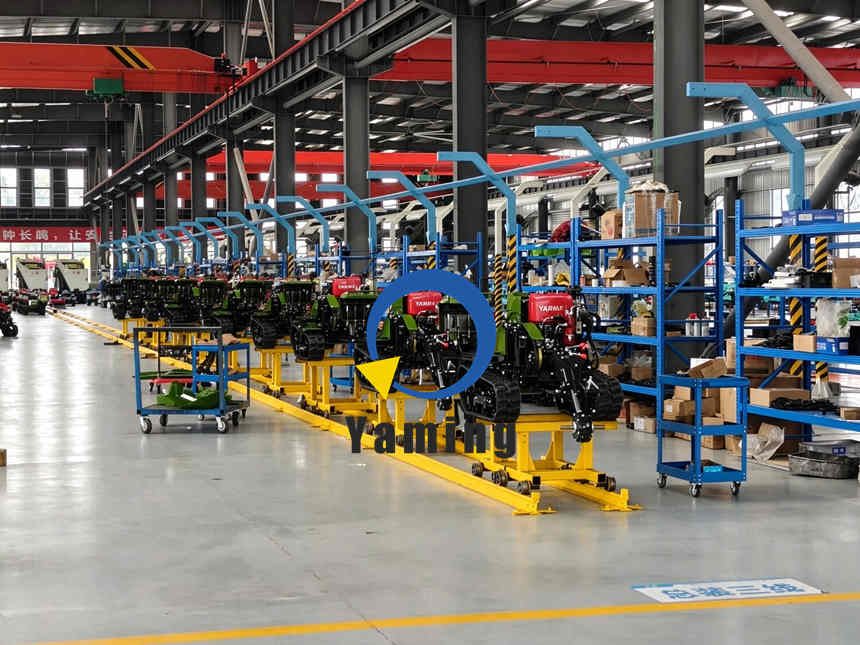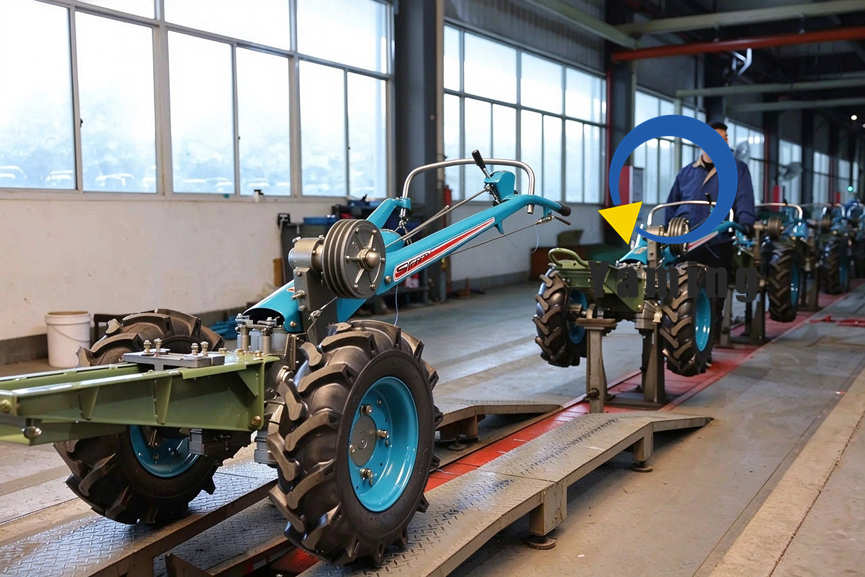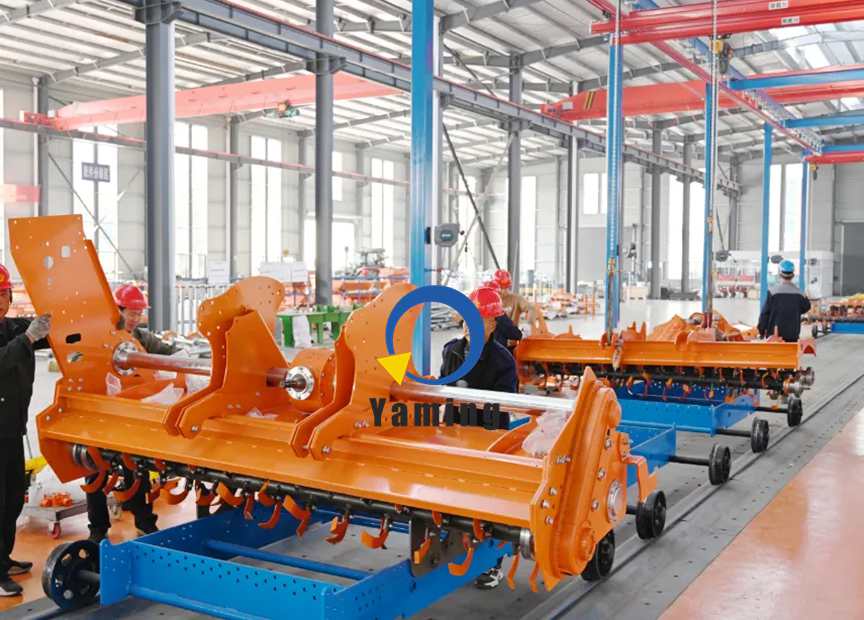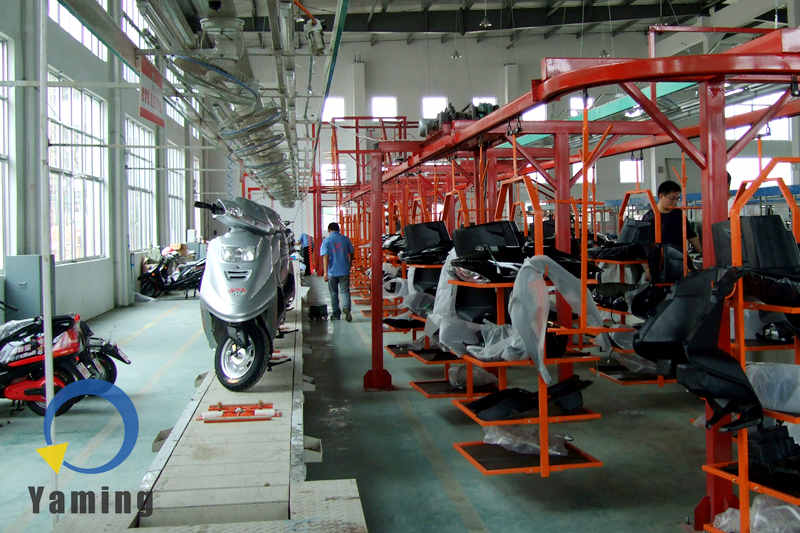
The electric scooter assembly line is an automated assembly system specially designed for the batch production of electric scooters. A complete line typically covers core processes including frame assembly, wheel axle assembly, brake system installation, electrical system wiring, and final testing, applicable to the production of electric scooters, folding scooters and other derivative models. Targeting the irregular shape of electric scooter frames and the multi-specification nature of components, this assembly line adopts a plate chain conveyor as the core ground conveying carrier, supplemented by a suspension conveyor system to build a complete material flow and assembly network.
1. Core Composition of the Assembly Line
Plate Chain Conveying Line
A traction chain drives the tooling pallets. The core transmission structure consists of steel structure guide rails, steel plate chains and special needle roller chains. The chain plate surface can be treated with anti-slip processing to ensure the frame remains stable and does not shift during conveyance. The tooling pallets can be equipped with various specifications of dedicated fixtures, compatible with models of 6-inch/8-inch wheel diameters and different battery capacities, firmly fixing the frame and other core components to achieve linear transfer of workpieces within the assembly process.
The line body adopts a modular assembly mode. The number of workstations can be set according to process requirements. Standard configurations include electric fans, fluorescent lights, air circuit pipelines, power sockets, tool boxes, and steel/stainless steel material boxes. The width, height and length of the plate chain line body can be customized according to vehicle dimensions and capacity requirements. The conveying speed can be adjusted via electromagnetic or variable frequency control within the range of 0.5-10 m/min. The conveying mode supports continuous operation or forced takt control, with takt time adjustable according to product process requirements.
Suspension Conveying Line
As an overhead conveying system, the suspension line combines tracks, carriages, traction chains and hangers to suspend and convey loose parts such as wheels, motors, batteries and controllers to each assembly workstation. The core advantage of this system lies in its non-occupation of ground space, enabling three-dimensional circular conveyance. It delivers parts synchronously according to the real-time demands of each assembly workstation, greatly reducing manual handling time and labor intensity, and works in coordination with the main plate chain line to build an efficient material supply network.
2. Core Advantages
Significantly Improved Assembly Efficiency
Materials are automatically delivered via the suspension line, reducing time waste in manual handling. The plate chain line speed can be adjusted via variable frequency within the range of 0.3-6m/min, flexibly matching capacity requirements of different order volumes. Through refined division of labor at workstations, the assembly cycle of a single electric scooter can be greatly compressed—traditional manual assembly takes 30-60 minutes, while the automated assembly line can reduce it to 10-15 minutes, improving assembly efficiency by over 50%. With highly automated configurations, fully automatic lines can achieve production efficiency of 100-200 units per hour.
Controllable Product Consistency
The assembly line is equipped with automated tools such as torque-controlled tightening devices and digital electrical testing equipment, reducing individual differences caused by manual operations such as torque deviation and incorrect wiring sequence. The first-pass product yield can be increased to over 99%, meeting the quality stability requirements of export markets.
Multi-model Flexible Compatibility
The line can support mixed-line production of multiple electric scooter models with 6-inch/8-inch wheel diameters and different battery capacities. Through modular design and rapid replacement of tooling fixtures, multi-variety mixed production can be achieved with minimal or no downtime, meeting personalized order demands and small-batch, multi-SKU production requirements. There is no need for large-scale line modification to respond to market changes.
Outstanding Cost Reduction and Efficiency Improvement
Automated equipment replaces repetitive labor such as screw tightening and heavy object lifting, significantly reducing dependence on basic operation positions and lowering labor costs. At the same time, it reduces component loss caused by manual operation errors, comprehensively compressing costs from the production end and improving the input-output ratio of the assembly line. In factories with an annual output of over 100,000 units, such assembly lines can significantly improve production efficiency by 30-50%.
3. Technical Configuration Reference
|
Item |
Configuration Description |
|---|---|
|
Conveying Form |
Plate chain ground conveyor + Suspension overhead conveyor |
|
Line Speed |
0.3-6m/min, variable frequency adjustable |
|
Single Unit Assembly Cycle |
10-15 minutes (depending on automation level configuration) |
|
Compatible Models |
6-inch/8-inch wheel diameters, multiple battery capacity configurations |
|
Control System |
PLC + Touch screen, optional MES system interface |
|
Workstation Configuration |
Flexibly set according to process requirements, including lighting, air circuits, power supplies, etc. |
|
Yield Rate |
≥99% |
The above represents reference configurations. Actual solutions can be customized according to customer plant dimensions, target capacity, and vehicle structure.