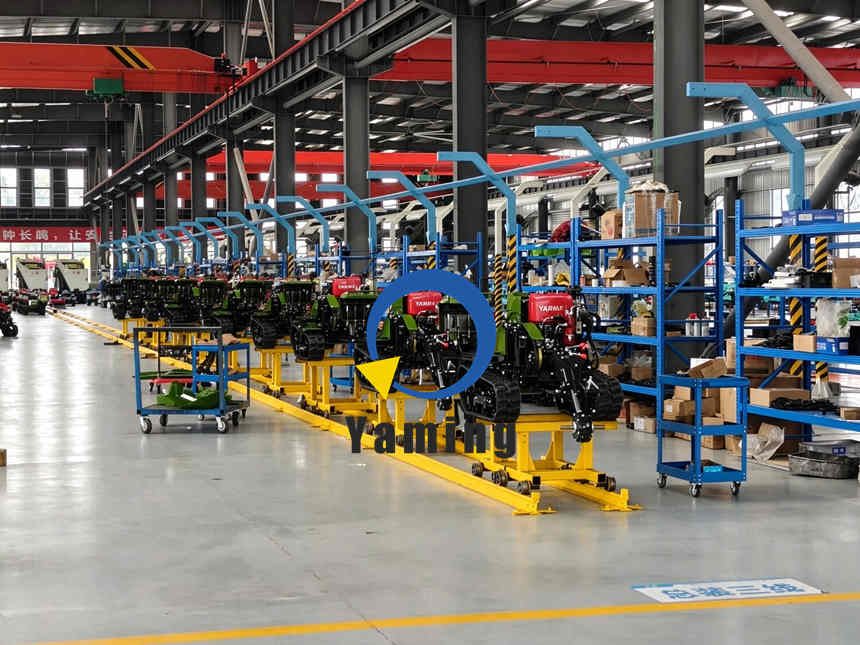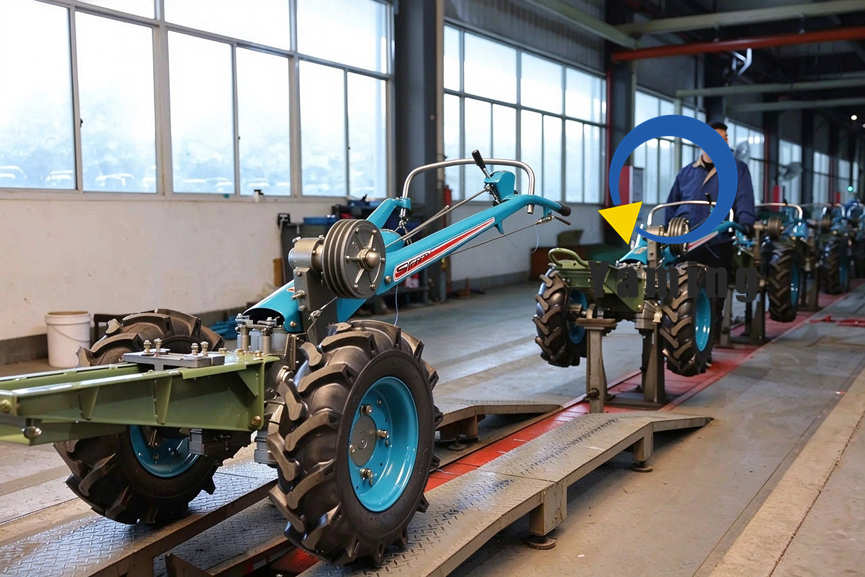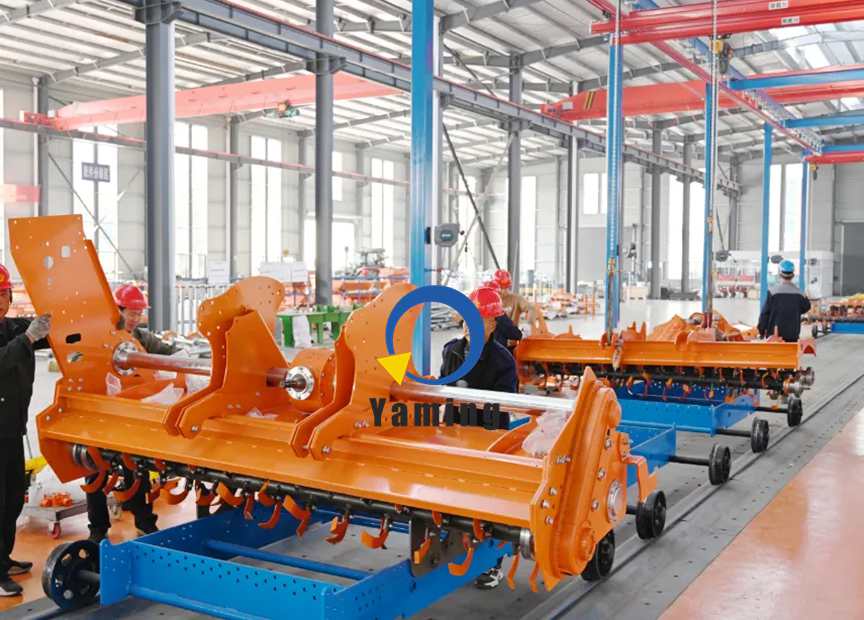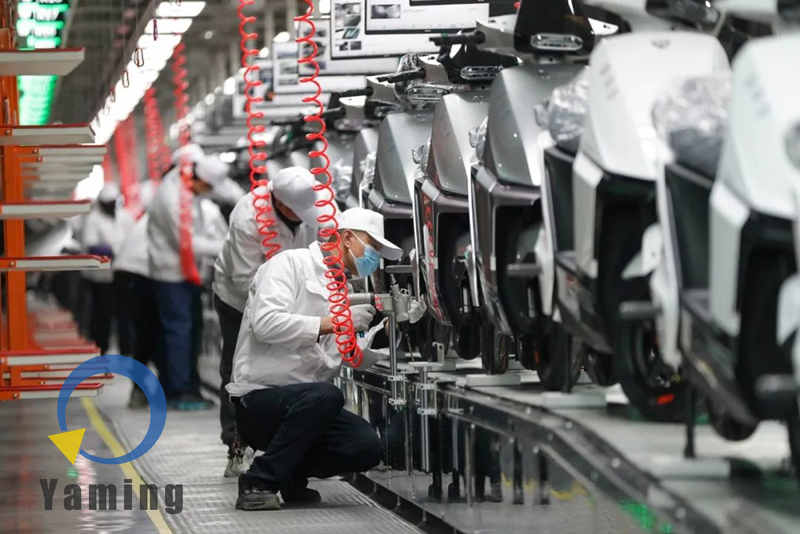
Electric motorcycles and their derivative electric tricycles are segmented by application scenario, load capacity and structural design, with significant differences in assembly complexity across categories, which serves as the core basis for assembly line selection.
Electric Motorcycle (Two-wheeler) Classifications
- Commuter type: The mainstream mass-market product, with a curb weight of 80–150kg, simple frame structure and standardized components, suitable for high-volume standardized production.
- Cargo type: Features reinforced frames and extended rear racks, with a payload of 100–300kg, widely used for short-haul logistics in Southeast Asia and South America. Assembly requires additional reinforcement of load-bearing joints.
- High-performance type: Targeted at EU export markets, with a curb weight of 120–200kg, equipped with high-power motors, lithium battery packs and advanced electronic control systems. Assembly demands strict precision for high-voltage component docking and performance calibration.
Electric Tricycle Classifications
- Passenger type: Equipped with semi-closed or fully enclosed cabins, designed to carry 2–4 passengers, mainly used for short-distance public transit in rural and suburban areas of emerging markets. Assembly involves additional body structure and interior component installation.
- Cargo type: The most widely adopted variant, with a payload of 300–1000kg, featuring a reinforced chassis, extended cargo box and high-torque powertrain. Assembly requires high-precision tightening of chassis load-bearing components and reliable powertrain connection.
- Special-purpose type: Includes refrigerated, sanitation and last-mile delivery tricycles, with customized structures for specific scenarios. Assembly lines for these models require flexible configuration to adapt to non-standard component integration.
To match the differentiated assembly requirements of the above vehicle categories, plate chain and AGV assembly line solutions are available for varying production capacities, model mixes and regional compliance standards.
1. Details of Two Mainstream Electric Motorcycle Assembly Lines
1.1 Plate Chain Assembly Line
Core Principle
The frame of the electric motorcycle is fixed to the accumulation pallet of the plate chain via a dedicated positioning fixture, with workstations arranged on both sides of the line. The plate chain only runs at a constant speed during the workpiece transfer phase. When the pallet reaches the corresponding workstation, a photoelectric sensor triggers a stopper, the plate chain stops, and workers complete the assembly of corresponding parts in a static state. After the assembly task at the current workstation is completed, the stopper releases the pallet, which moves to the next station along the plate chain, and empty pallets are automatically recycled to the loading end for reuse.
Note: Mobile assembly during conveyance is strictly prohibited in electric motorcycle assembly lines to avoid safety risks caused by the shaking of heavy components such as batteries and frames, and to ensure the assembly accuracy of processes such as tightening and docking.
Core Advantages
- High production efficiency: 150%-250% higher than pure manual assembly lines, with a standard takt time of 70-100 seconds per unit, single-shift capacity of 180-350 units, and maximum annual capacity of 150,000 units. Workers do not need to manually handle workpieces, only focusing on their assigned assembly tasks, reducing invalid labor hours by more than 40%.
- Strong adaptability for mass production: Standardized operation processes control product consistency error within ≤0.8mm, reducing human-induced assembly errors by more than 60%. It is fully suitable for standardized production of single-model, high-volume, low-SKU commuter electric motorcycles, and is the preferred solution for mass-market electric motorcycle factories in Southeast Asia and South America.
Applicable Scenarios
Only suitable for mass production of 1-2 models on the same platform with minimal structural differences. It does not support fast model changeover for mixed-line production, making it ideal for cost-sensitive, stable-order commuter model projects.
Industry Standard Parameters
| Parameter Item | Industry Standard |
|---|---|
| Conveyance Speed | 0.3-2m/min, variable frequency adjustable (only runs during transfer phase) |
| Single Workstation Load Capacity | ≤350kg (matches the industry requirement that the curb weight of electric motorcycles is ≤300kg) |
| Accumulation Positioning Accuracy | ±1mm |
| Number of Workstations | 15-40 |
| Automation Rate | 10%-25% (only tightening and filling processes can be automated; the plate chain structure limits the integration of complex automation equipment) |
| Operational Availability | ≥97% |
| Model Changeover Time | ≥30 minutes (requires adjustment of fixtures and positioning blocks, low flexibility) |
1.2 AGV Intelligent Assembly Line
Core Principle
Laser/QR code navigation AGVs are used as the core conveyance carrier, equipped with customized tooling pallets to carry frames or semi-finished products. AGVs automatically travel along the system-planned path, stop and dock with power and communication systems when reaching designated workstations. After assembly is completed, the AGV automatically moves to the next station, and idle AGVs automatically return to the charging area for replenishment.
Core Advantages
- Highest flexibility in the industry: Supports mixed-line production of 100+ models with different sizes and configurations. No hardware adjustment is required for model changeover; only parameter switching on the MES system is needed, with changeover time ≤5 minutes, far exceeding the flexibility of traditional plate chain lines, perfectly suitable for high-end customized and small-batch personalized electric motorcycle production.
- Strong layout adaptability: No fixed guide rails are required, and the AGV travel path can be modified at any time according to plant structure and process adjustments, especially suitable for old plant renovation projects without large-scale civil construction.
- Perfect intelligent control capability: AGVs are equipped with IoT modules to upload real-time position, operation status and assembly progress data to the MES system for full-process quality traceability. It supports automatic obstacle avoidance, with operational safety ≥99.9%.
Applicable Scenarios
Suitable for small-batch, multi-SKU production scenarios with an annual capacity of 10,000-50,000 units, such as high-end electric motorcycles exported to the EU and customized modified models, catering to customers who need to frequently adjust product configurations and respond to niche market demands.
Industry Standard Parameters
| Parameter Item | Industry Standard |
|---|---|
| Navigation Accuracy | ±10mm |
| Maximum Travel Speed | 1.5m/s |
| Single AGV Load Capacity | ≤1000kg |
| Endurance | 8 hours of continuous operation, 1 hour for full automatic charging |
| Multi-model Mixed-line Capability | Supports 100+ models |
| Operational Availability | ≥97% |
2. Full-process Process Adaptation for Electric Motorcycle Assembly Lines
Regardless of the conveyance line selected, our assembly lines cover the full assembly process of electric motorcycles, with customized designs for the three-electric system (battery, motor, electronic control), fully complying with target market regulations:
- Frame loading: The frame is fixed to the conveyance carrier, followed by frame number marking and anti-rust treatment.
- Powertrain assembly: The motor, controller and reducer are married, using torque-controlled tightening equipment with torque error ≤±2%, and all data is uploaded to the MES system for traceability.
- Battery pack assembly: The battery pack is fixed, high-voltage wiring harnesses are connected, and high-voltage interlock (HVIL) testing and insulation resistance testing are completed to ensure electrical safety.
- Chassis assembly: Front fork, rear swingarm, wheels and braking systems are installed, and brake fluid is filled via vacuum filling equipment with filling volume error ≤±3ml.
- Electrical system assembly: Instruments, lights, horns and charging interfaces are installed, and full-vehicle circuit continuity testing is completed to avoid short circuits and loose connections.
- Interior and exterior assembly: Seats, fairings, rearview mirrors and brand logos are installed, using dedicated positioning fixtures to control assembly gap error within ≤0.3mm, meeting appearance quality requirements.
- Filling and commissioning: Brake fluid and coolant (if applicable) are quantitatively filled, followed by motor performance testing and controller parameter calibration to adapt to voltage and road conditions of different target markets.
- End-of-line testing: Water spray (rain) testing, headlight adjustment, chassis dynamometer testing and 500m road testing are completed to comply with target market regulations (such as EU E-MARK certification and local access standards in Southeast Asia).
- Finished vehicle off-line: Qualified vehicles are transferred to the finished vehicle warehouse for shipment, and all testing data is retained for at least 3 years for traceability.
3. General Industry Acceptance Criteria
All electric motorcycle assembly lines must meet the following general requirements, which can be used as reference standards for contract signing:
- First-pass assembly yield ≥97%
- Equipment operational availability ≥97% (for both plate chain and AGV lines)
- Takt time compliance rate ≥98%
- 100% traceability rate for all key process data
- Complies with ISO9001 and IATF16949 quality management system requirements; EU export projects can meet CE certification standards.
4. Our Service Advantages
With over 10 years of experience in the assembly line field, we focus exclusively on assembly process solutions, providing full-process services from process planning, equipment customization, installation and commissioning to on-site production training:
- Strong customization capability: Solutions are adapted to special environments such as high temperature and humidity in Southeast Asia and sandy conditions in the Middle East. The operation interface supports multiple languages, and local workers can be trained to work independently within 7 days.
- Controllable delivery cycle: Standard plate chain line solutions are delivered within 8-12 months, customized AGV solutions within 12-18 months, much faster than the industry average.
- Complete warranty service: 2-year warranty for core components, lifetime technical support, dedicated after-sales engineers for docking, and fault response time ≤24 hours.
- Comprehensive supporting capability: In addition to electric motorcycle assembly lines, we can synchronously provide supporting solutions such as motor assembly lines and battery pack assembly lines to meet customers’ multi-field automated production needs.