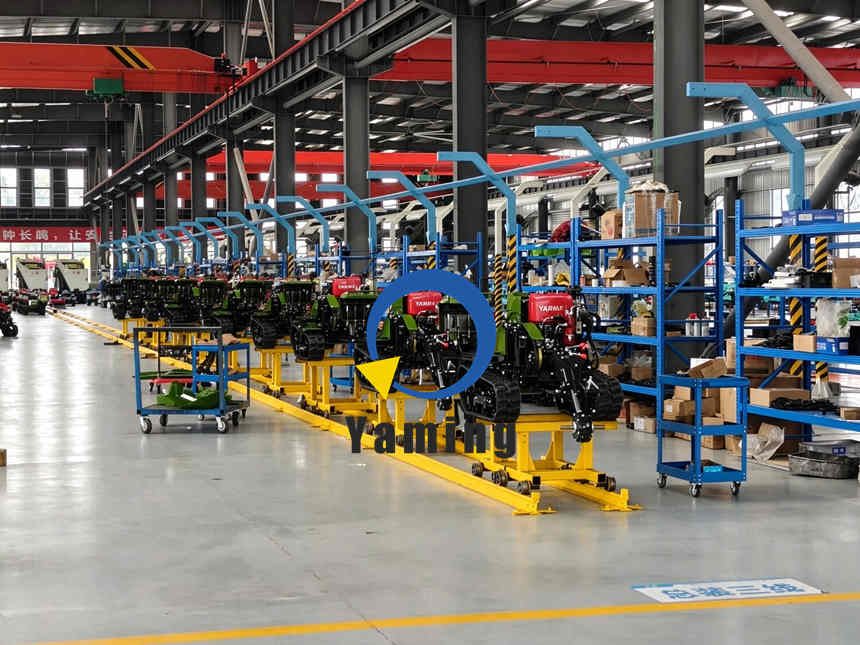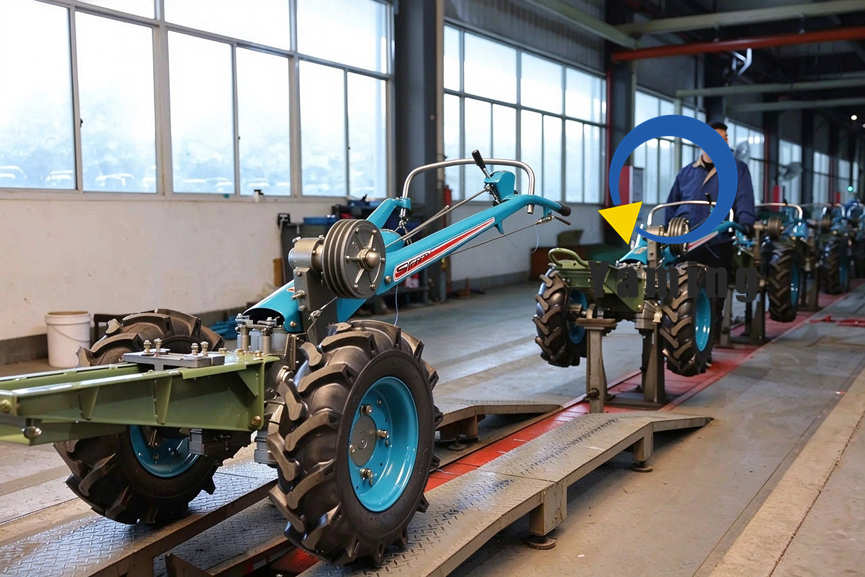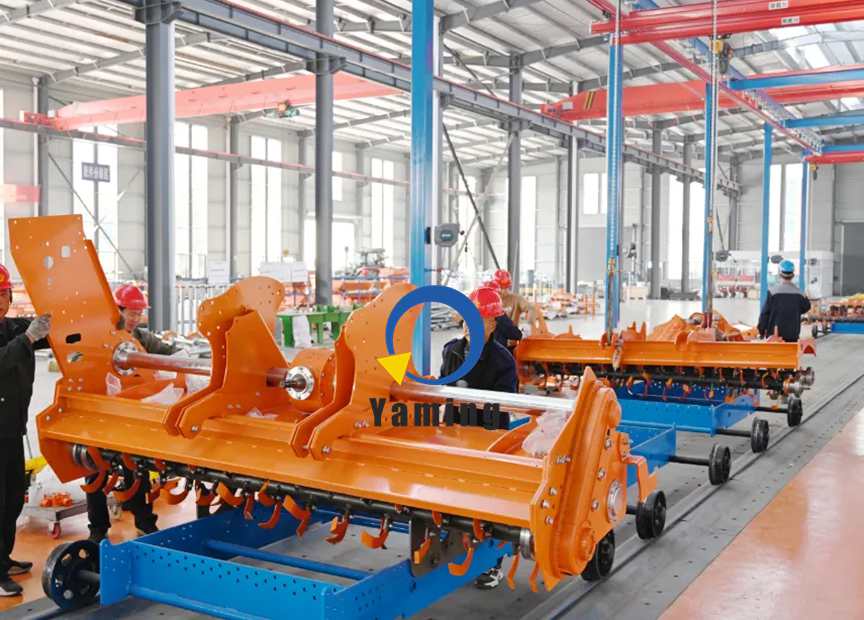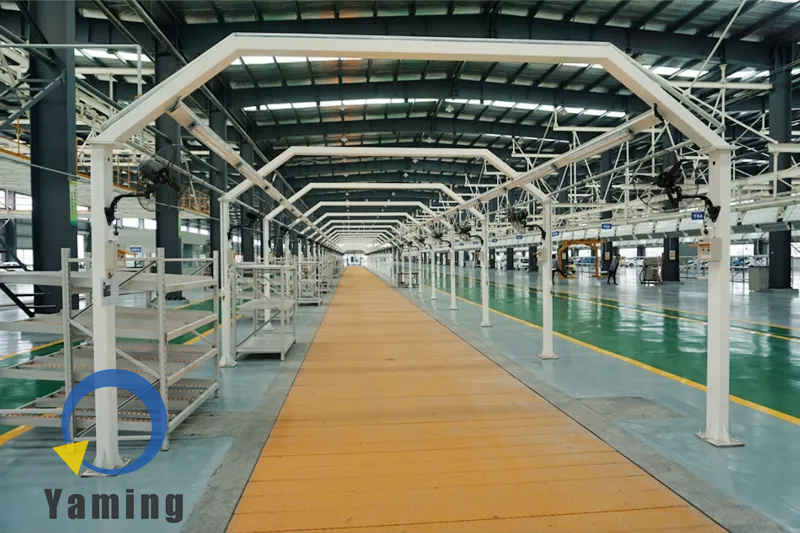
Unlike full-process equipment suppliers covering stamping, body-in-white welding and painting, we exclusively focus on the R&D, design and end-to-end delivery of automobile CKD final assembly lines. With over 10 years of experience in final assembly conveyance systems, assembly processes and localization adaptation, we provide OEMs with full-process CKD project services ranging from process planning to on-site production training.
1. Overview of Automotive Production Process: Core Positioning of CKD Final Assembly
1.1 Four Core Processes of Conventional Automotive Manufacturing
Traditional vehicle manufacturing follows four core processes: stamping, body-in-white (BIW) welding, painting and final assembly. Stamping processes steel plates into body panels; BIW welding assembles these panels into a complete body structure; painting applies anti-corrosion treatment and paint to the BIW; final assembly is the last process that integrates all loose parts into a complete vehicle, and the core stage where final product quality is finalized.
1.2 Value of Final Assembly in CKD Mode
Under the CKD (Completely Knocked Down) model, OEMs can choose two pathways based on the policy requirements of the target market: one is to build local BIW welding and painting workshops to produce BIWs before final assembly; the other is to directly import compliant BIWs and only complete final assembly locally. Regardless of the pathway, final assembly is the core implementation stage of any CKD project:
- It receives all minimum-unit loose parts ranging from bolts and gears to powertrain assemblies and interior parts, contributing over 40% of the total added value of CKD projects, the highest among all CKD stages;
- It directly interfaces with local market demands, enabling flexible configuration adjustments to comply with local regulations and user preferences;
- It serves as the core lever for OEMs to control CKD project quality and reduce localization costs.
1.3 Our Business Scope
We exclusively focus on the delivery of the final assembly stage, with no involvement in BIW welding or painting processes. We provide customized solutions including floor chain main conveyance lines, auxiliary sub-assembly lines and testing equipment, compatible with multiple vehicle types such as sedans, SUVs and light commercial vehicles, to help customers maximize the tariff advantages and labor cost optimization potential of the CKD model.
2. Key Processes of CKD Final Assembly Line (Floor Chain as Core Conveyance System)
Our CKD final assembly line adopts a floor chain as the core main conveyance system, supplemented by auxiliary sub-assembly lines. It supports a standard cycle time of 80–114 seconds per unit, enables mixed-line production of 2–6 models on the same platform, and covers all processes from BIW loading to finished vehicle off-line, fully aligning with the process framework provided.
| Process Node | Core Operation Content | Our Equipment Configuration and Advantages |
|---|---|---|
| 2.1 Assembly Preparation Section (Starting Station of Floor Chain) | Corresponding to the “assembly preparation” stage: After CKD loose parts arrive at the port, IQC (Incoming Quality Control) sampling inspection is completed, parts are sorted to SPS (Set Parts Supply) smart kitting carts according to the production BOM, and torque tools and special fixtures are calibrated synchronously. The floor chain conveys empty skids to the loading station, the BIW (locally welded or imported) is fixed to the skid, and the unit enters subsequent stations according to the takt time. | Equipped with smart sorting stations, automatic tool calibration stations and skid positioning fixtures, supporting scan-based error proofing to avoid incorrect or missing assemblies. The system is adapted to the labor skill level in developing countries, with multi-language operation interfaces; operators can be trained to be competent within 7 days at most. |
| 2.2 Body Pre-assembly Section | Corresponding to the “body assembly” stage: The floor chain conveys the BIW forward at the takt time, and front wall modules, rear wall modules, door hinges, fenders and other sub-components are installed in sequence, with chassis wiring harnesses and fuel lines pre-laid synchronously. | Equipped with dedicated positioning fixtures, with assembly accuracy error ≤0.5mm. It supports fast model changeover for mixed-line production, with changeover time ≤15 minutes, adapting to the small-batch, multi-batch production demand of CKD projects. |
| 2.3 Chassis and Powertrain Marriage Section (Core Critical Station) | Corresponding to the “powertrain equipment installation” stage: The chassis sub-assembly line pre-assembles the engine, transmission system, suspension, braking system, steering system and other components into a complete chassis module. When the floor chain conveys the BIW to the marriage station, a hydraulic lifting platform raises the chassis module and aligns it precisely with the BIW. Torque-controlled tightening equipment is used to fasten bolts, and all data is uploaded to the MES (Manufacturing Execution System) in real time for full traceability. | The floor chain delivers positioning accuracy of ±0.5mm, ensuring marriage error ≤0.5mm. We configure Bosch-grade torque-controlled tightening systems, with torque error ≤±3% and full data traceability, meeting OEMs’ original factory quality requirements. |
| 2.4 Interior Assembly Section | Corresponding to the “interior assembly” stage: The floor chain continues to convey the vehicle body, and the skateboard height is adjustable to the ergonomically optimized 400mm level. Processes including instrument panel pre-assembly, seat installation, carpet laying, headliner installation, interior panel assembly and wiring harness connection are completed in sequence. SPS carts deliver parts to corresponding stations synchronously, with scan-based error proofing to avoid configuration errors. | The adjustable-height skateboard reduces worker labor intensity and adapts to local labor characteristics. The error-proofing system supports mixed-line production of 2–6 models, enabling rapid response to local market demands for differentiated configurations such as seat materials and infotainment systems, aligning with the “flexible production” advantage noted. |
| 2.5 Exterior Assembly Section | Corresponding to the “exterior assembly” stage: The floor chain conveys the vehicle body to the exterior assembly station, where front/rear windshield automatic gluing and installation, headlight, bumper, grille, wheel and brand logo installation are completed in sequence. Automatic positioning fixtures are used for windshield installation to ensure uniform assembly gaps, and automatic tightening equipment is used for wheel installation, with all data traceable. | Equipped with automatic glass gluing machines, automatic wheel tightening machines and exterior part positioning fixtures, with assembly gap error ≤0.3mm, meeting finished vehicle appearance quality requirements. |
| 2.6 Fluid Filling and Commissioning Section (Mandatory Supplementary Process for Final Assembly) | The floor chain conveys the vehicle body to the filling station, where vacuum filling equipment is used to complete quantitative filling of brake fluid, coolant, refrigerant, windshield washer fluid and engine oil, with filling volume error ≤±5ml. For new energy vehicles, the battery pack marriage, high-voltage interlock loop (HVIL) test and insulation resistance test are completed at this station to ensure electrical safety. | The filling equipment supports automatic parameter switching for multiple models, adapting to CKD projects with different powertrain types. |
| 2.7 End-of-Line Quality Inspection Section | Corresponding to the “quality inspection” stage: The floor chain conveys the finished vehicle to the testing line, where wheel alignment, chassis dynamometer testing, water spray (rain) test, headlight adjustment, ADAS calibration and 500–1000m road testing are completed in sequence. Finally, an Audit review is conducted to confirm that the vehicle quality complies with both the OEM’s original factory standards and local regulatory requirements. All testing data is uploaded to the MES for full traceability. | Equipped with wheel aligners, chassis dynamometers, water spray test chambers, headlight adjusters and ADAS calibration systems, with first-pass assembly yield ≥98%, meeting the IATF 16949 (formerly ISO/TS16949) industry quality standard. |
| 2.8 Auxiliary Sub-assembly Systems (Supporting Process for Final Assembly) | In addition to the floor chain main line, auxiliary sub-assembly lines including door sub-assembly lines, instrument panel sub-assembly lines, chassis sub-assembly lines and battery pack sub-assembly lines are provided. All sub-assembled parts are delivered to the main line according to the takt time to ensure smooth operation of the final assembly line. | The auxiliary lines are fully synchronized with the main line’s takt time, support customized design and can be adapted to the customer’s plant layout requirements. |
3. Industry Standard Parameters for CKD Final Assembly Lines (Floor Chain as Core Reference)
The floor chain is the core conveyance equipment for CKD final assembly lines and the mainstream solution widely adopted in the industry. The following parameters are universal standards for global CKD final assembly projects, which can be used as references for external quotations.
3.1 Industry Standard Parameters for Floor Chain Conveyors
| Parameter Item | Industry Standard | Applicable Scenario |
|---|---|---|
| Conveyance Speed | 0.5–2m/min (variable frequency adjustable) | Matches production takt of 15–30 JPH (Jobs Per Hour) |
| Maximum Skid Load Capacity | ≤3000kg | Covers all vehicle types including sedans, SUVs and light commercial vehicles |
| Positioning Accuracy | ±0.5mm | Meets accuracy requirements for marriage and assembly processes |
| Maximum Climbing Angle | ≤5° | Adapts to flat layout of final assembly workshops, no additional civil engineering modification required |
| Drive Mode | Variable frequency motor + double-row roller chain drive, multi-point drive system | Prevents chain slack, operational stability ≥99.5% |
| Protection Rating | IP54 | Adapts to oily and dusty environments in final assembly workshops |
| Service Life | ≥10 years or 200,000 vehicles | Industry-standard warranty, 2-year warranty for core components |
| Model Changeover Time | ≤15 minutes | Supports fast multi-model mixed-line switching, adapts to small-batch production demands of CKD projects |
3.2 Overall Industry Standard Parameters for CKD Final Assembly Lines
| Parameter Item | Standard Configuration (for small-to-medium CKD plants with annual capacity of 20,000–50,000 units) | Premium Configuration (for mid-to-high-end CKD plants with annual capacity of 50,000–150,000 units) |
|---|---|---|
| Production Takt (JPH) | 15–20 units/hour | 25–30 units/hour |
| Total Floor Chain Length | 800–1200m | 1500–2000m |
| Total Number of Workstations | 60–80 | 100–120 |
| Automation Rate | 30%–40% (automation for tightening, filling, gluing processes) | 50%–60% (additional automation for marriage, automatic glass installation, etc.) |
| Multi-model Mixed-line Capability | 2–3 models on the same platform | 4–6 models on the same platform |
| Data Traceability | 1-year data storage on local servers | Full-process data traceability via integrated MES system, permanent data storage |
| Floor Space Requirement | 15,000–25,000 m² | 30,000–45,000 m² |
| Energy Consumption per Unit | ≤0.8 kWh/vehicle | ≤0.6 kWh/vehicle (energy-saving configuration) |
| Assembly Accuracy | Marriage error ≤0.5mm, torque error ≤±3% | Marriage error ≤0.3mm, torque error ≤±2% |
| Acceptance Criteria | Complies with IATF 16949 (formerly ISO/TS16949) and OEM original factory quality standards | Complies with EU CE certification, IATF 16949 (formerly ISO/TS16949) and OEM original factory quality standards |
3.3 General Industry Acceptance Criteria
All CKD final assembly lines must meet the following general requirements, which can be used as reference standards for signing contracts with customers:
- First-pass assembly yield ≥98%
- Equipment failure rate ≤1%
- Takt time compliance rate ≥99%
- 100% traceability rate for all key process data
4. Contact Information
For any inquiries or requirements related to automobile CKD assembly lines, please contact us:
Email: [email protected]
Business Scope: End-to-end design, manufacturing, installation, commissioning and on-site production training for CKD final assembly lines; customized development of floor chain conveyor systems, sub-assembly lines and testing equipment; upgrading and renovation of existing final assembly lines.
Service Advantages: We exclusively focus on final assembly line solutions with strong customization capabilities. Our systems are adapted to meet localization requirements in Southeast Asia, the Middle East, South America and other target markets. We deliver projects within 12–18 months, provide 2-year warranty and lifetime technical support.
If you need a customized CKD final assembly line solution tailored to your target market, please contact us via email. We will respond to your inquiry promptly.